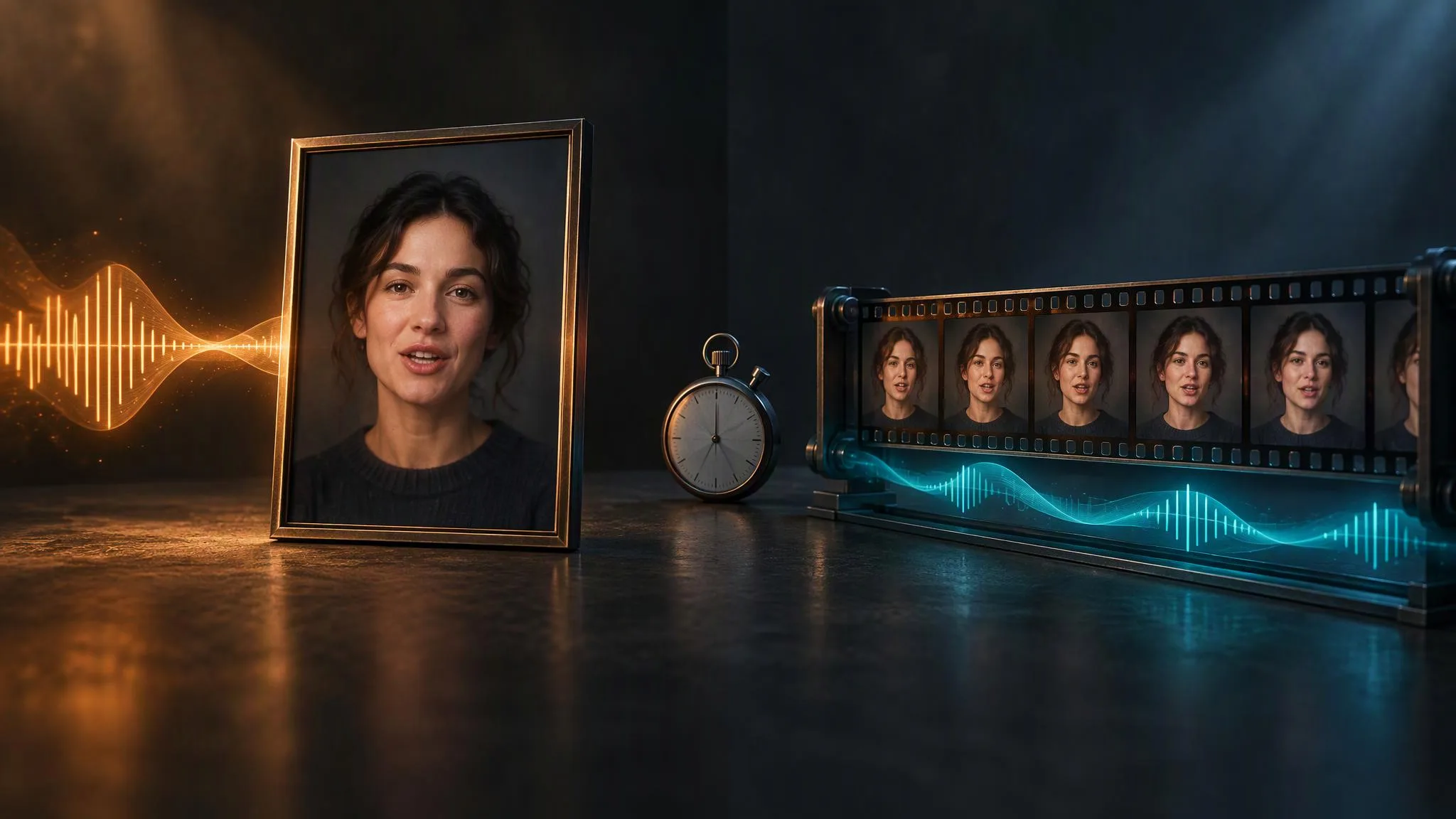
LUVI has six lip-sync families, and they do two different jobs: four animate a still portrait from an audio track, two re-drive the mouth in a video you already have. Which job you are doing also decides which clock you pay for—audio seconds or video seconds.
Four of the 224 models in LUVI's catalog expose a Negative Prompt field, and they are all Qwen Image. The field disappeared because the sampling method it depends on did. Here is what replaces it on each family, and the three places where writing "no X" still works.
Higgsfield, Krea, OpenArt and LUVI Creator all run hosted MCP connectors that let Claude or ChatGPT generate on your account. They differ in whether you see the price before a run, how many models they expose, and whether the assistant gets each model's prompting guide.
Most video models on LUVI now render sound in the same pass as the picture, but they disagree about almost everything else: whether the switch is on, whether it costs more, and how you write the sound. Here is the audio switch and the audio syntax for each family, checked against their schemas.
All three generate picture and sound in one pass, and all three read a prompt differently: H3 wants a fielded document, Omni wants a caption with a continuity clause, Wan wants an additive formula. Prices, limits and the one rule that breaks each of them.